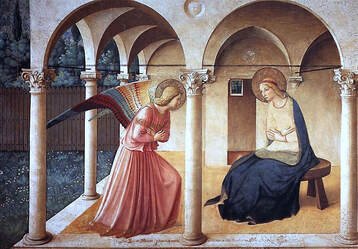
 The Annunciation, fresco by Fra Angelico, 1438-45
A most blessed Solemnity of the Annunciation to all! It was on this very same day about two thousand years ago in the small town of Nazareth that the Second Person of the Most Holy Trinity took flesh in the womb of the Virgin Mary.
In an attempt to understand the mystery of the incarnation, we first need to keep in mind the big picture, that is, the whole purpose and reason of why God even became man.
It is with this rupturing of man’s friendship with God that the need of a redeemer can be clearly seen.
|
In 2000 Saint John Paul II celebrated a mass at the Basilica of the Annunciation in Israel and in his homily he said that we must return to the Letter to the Hebrews “in order to understand what took place in Nazareth two thousand years ago.” Because it is in this text that we are able, “as it were, to listen to a conversation between the Father and the Son concerning God’s purpose from all eternity. ‘You who wanted no sacrifice or oblation prepared a body for me. You took no pleasure in holocausts or sacrifices for sin. Then I said. . . God, here I am! I am coming to obey your will’ (Heb. 10:5-7).
|
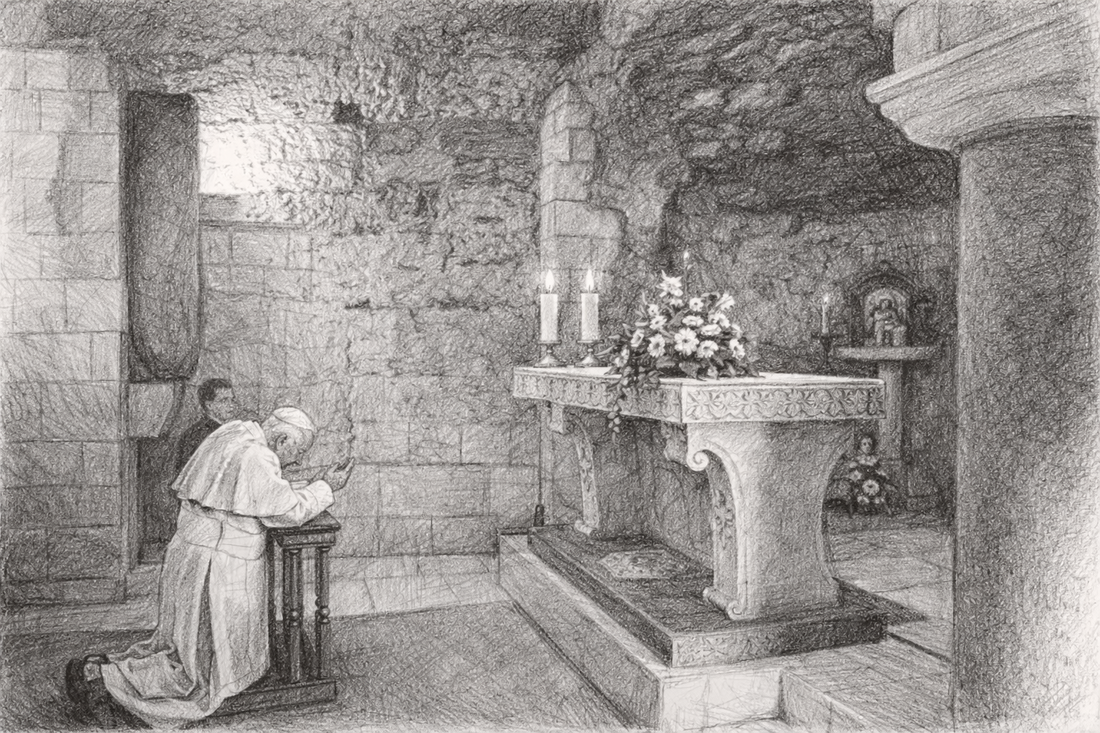
Pope John Paul II prays at a small altar at the Basilica of the Annunciation in Nazareth March 25, 2000
|
It is particularly in these moments like these that we, like Mary “must walk through darkness, in which she must simply trust the One who called her
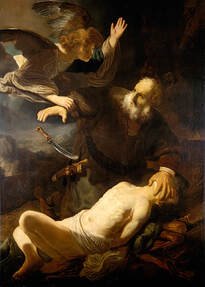 Sacrifice of Isaac by Rembrandt Harmensz. van Rijn. 1606-1669
St. John Paul II continues: “for both Abraham and Mary, the divine promise comes as something completely unexpected. God disrupts the daily course of their lives, overturning its settled rhythms and conventional expectations.” And sometimes this happens to us as well. God at times allows things to happen to us which we do not normally expect, things which throw off our daily rhythm of life and the way we think things ought to go. We can take, for example, all that has happened during this time of covid 19. It is particularly in these moments like these that we, like Mary “must walk through darkness, in which she must simply trust the One who called her.”
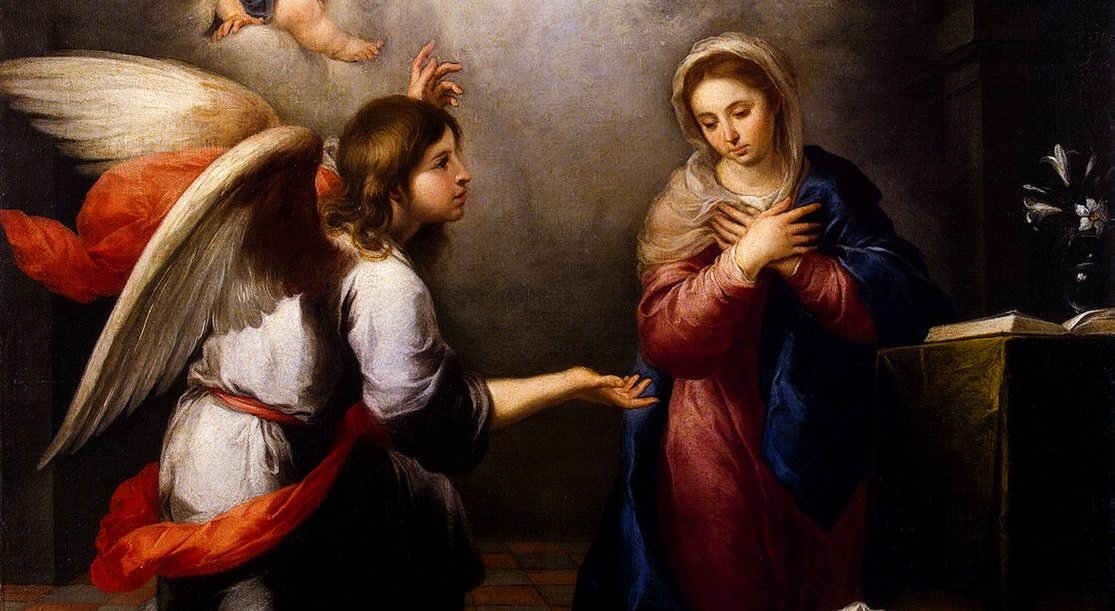
St. John Paul II’s Annunciation Homily: http://www.vatican.va/content/john-paul-ii/en/travels/2000/documents/hf_jp-ii_hom_20000325_nazareth.html